Article
Portugal Homes
Get the best property advice.
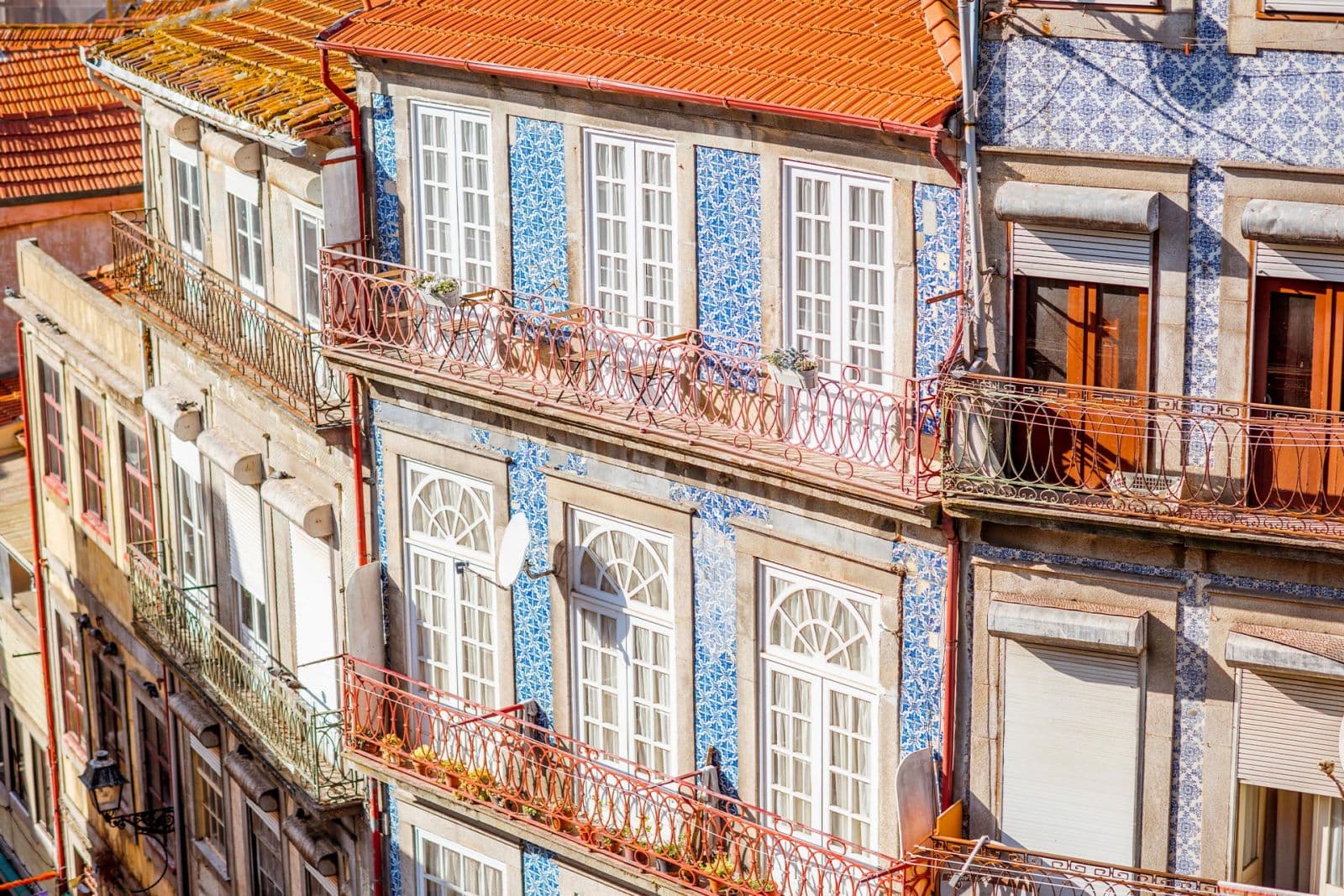
Portugal has several interesting features in its architecture, but none are more noticeable and iconic than the tiles, or azulejos, covering every inch of buildings across the country.
Strolling around the historic areas of Portuguese cities like Lisbon and Porto, you will encounter this stunning yet everyday artform everywhere. The tiles appear in both modern and historic constructions, with some dating back centuries.
Homes and commercial properties such as restaurants, cafes, and shops all work tiles into their architecture and decoration, and many public buildings, churches, and train stations have large and impressive tile murals and decorations, often designed by famous Portuguese artists. Tiles are everywhere in Portugal, but why?
Why are Portuguese Buildings Tiled?
Portuguese architecture is distinctive and features several unique characteristics. One of the most famous is the beautiful Portuguese tiles that cover buildings with colourful patterns.
Structures adorned with tiles have become one of Portugal’s most recognisable symbols, representing the country’s culture around the world. Standing apart from other types of tiles, Portuguese tiles have a distinctive trait: they are typically decorated in shades of blue and white.
To understand why this is the case, we need to look back into history, even before the country’s formation.
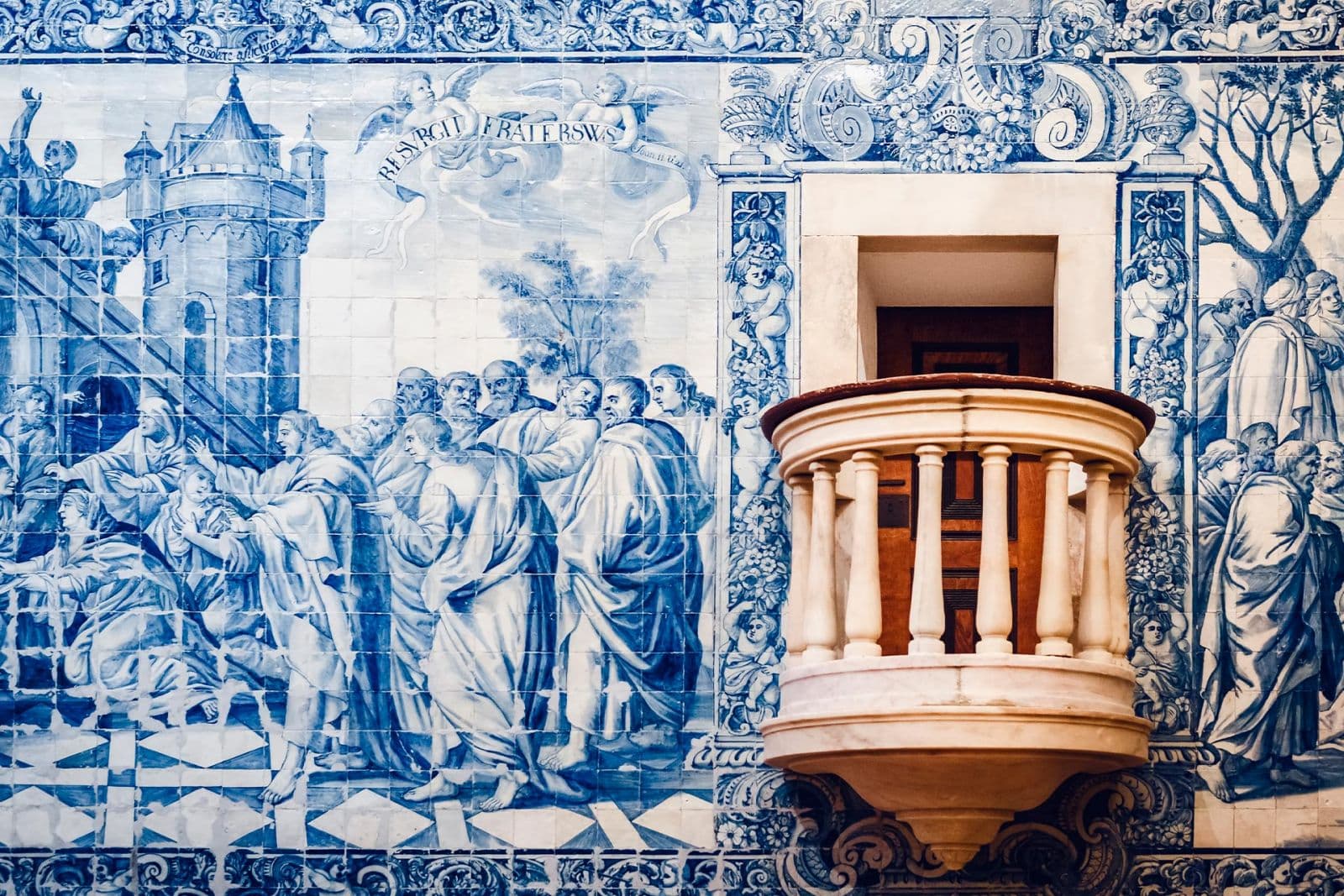
The art of producing tiles is ancient and long predates the formation of Portugal as a country. It originated in Mesopotamia and Ancient Egypt around the third millennium BC. Although the Romans conquered Iberia in 218 BC, the art of tile-making only took root in the region after its introduction by Muslims in the 7th century.
The Moorish occupation of the Iberian Peninsula had an enormous cultural impact on both Portugal and Spain and left a lasting mark on the region, one legacy of which is the art of tile production. The Portuguese term azulejos is derived from the Arabic word al-zulaich, meaning “polished stone.”
The Origins of Portuguese Tiles
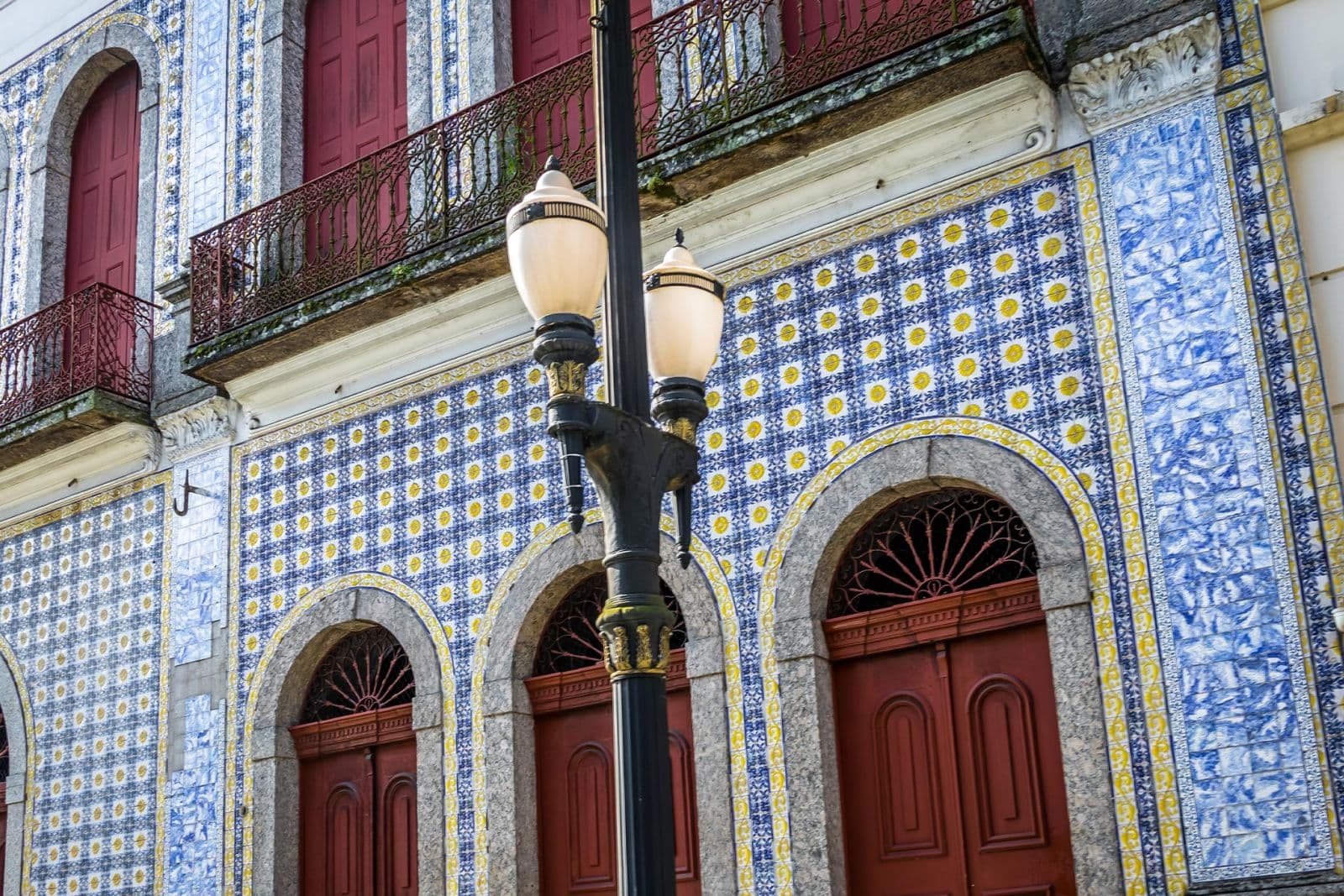
The production of tiles in Portugal and their use in construction can be traced back to the 16th century, when they were introduced from Spain.
Historically, southern Spain was considered the capital of the Moorish empire in Europe, with the Caliphate of Córdoba being its most powerful centre. As a result, the use of tiles as architectural adornment was already widespread in public buildings throughout the Andalusia region.
It was in 1498 that King Manuel I of Portugal visited Seville and was dazzled by the artistic richness of this decorative tradition. He subsequently decided to import tile-making techniques for his residence at the National Palace of Sintra.
From that point on, tiles began to appear in Portuguese architecture as a symbol of status and wealth. Inspired by the trend set by the King, Portuguese builders and architects explored this feature extensively, using tiles in both the interiors and exteriors of churches, public squares, public buildings, and private homes.
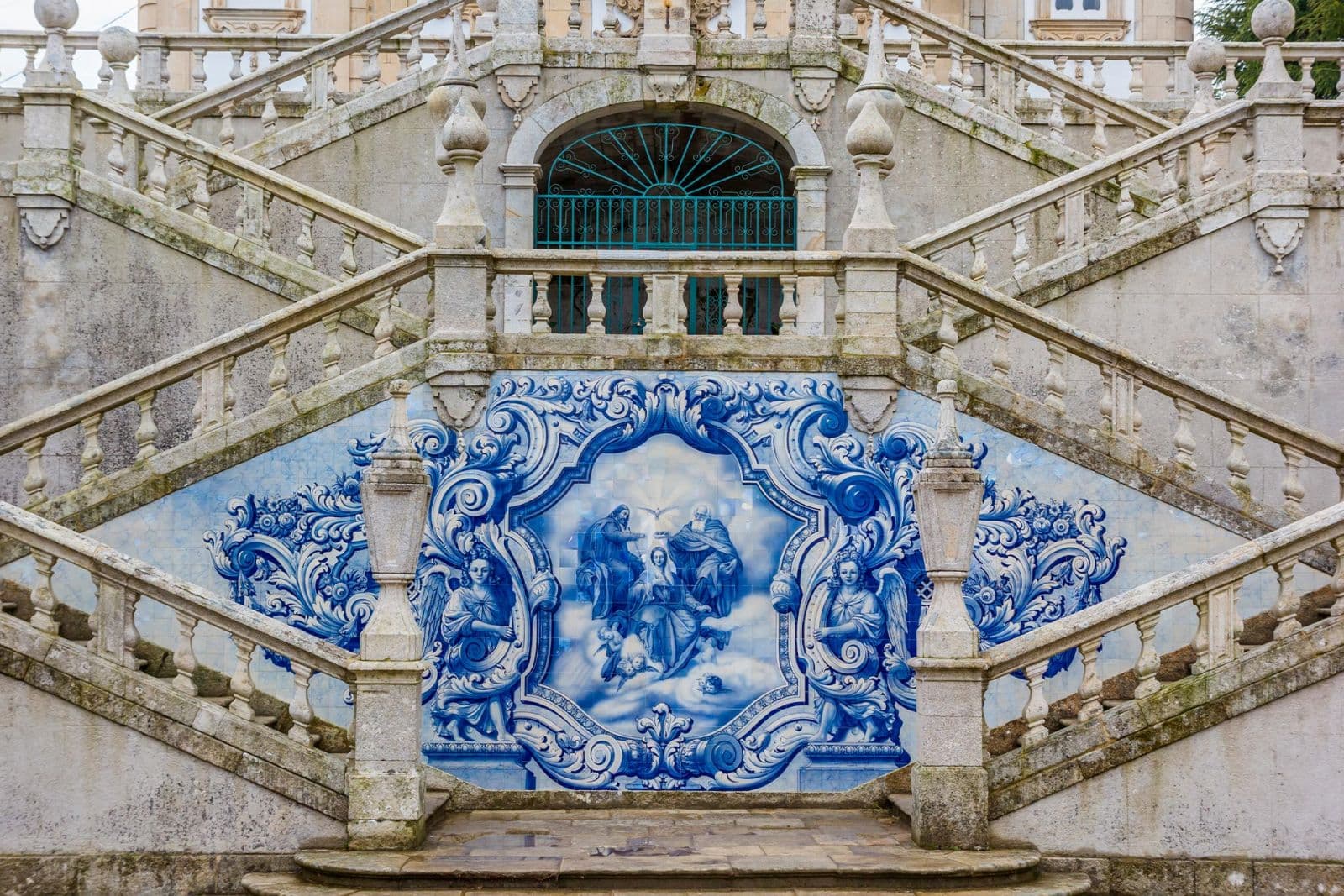
In the late 16th century, this Moorish art was combined with the Italian invention known as maiolica, a technique that involves painting colourful figures onto a layer of white enamel applied to wet clay.
With the fusion of these techniques, tiles became brighter and more vibrant, making them perfectly suited to interior design. Tiles soon became an integral part of Portuguese culture and remain a defining feature of traditional Portuguese-style homes.
Why Are Portuguese Tiles So Often Blue and White?
To explain this, we need to go back in history to the Age of Discoveries, when Europe began establishing trade relationships with Asia. During this period, Europeans were introduced for the first time to Chinese porcelain, a luxury object of great rarity.
Due to the high cost of these items, Dutch artisans began producing tiles using Italian techniques, but in the same blue-and-white palette found in Chinese porcelain. This new style impressed the Portuguese so greatly that they began to replicate it, producing their own tiles based on this concept.
Where Can You Find the Most Beautiful Tiled Buildings in Portugal?
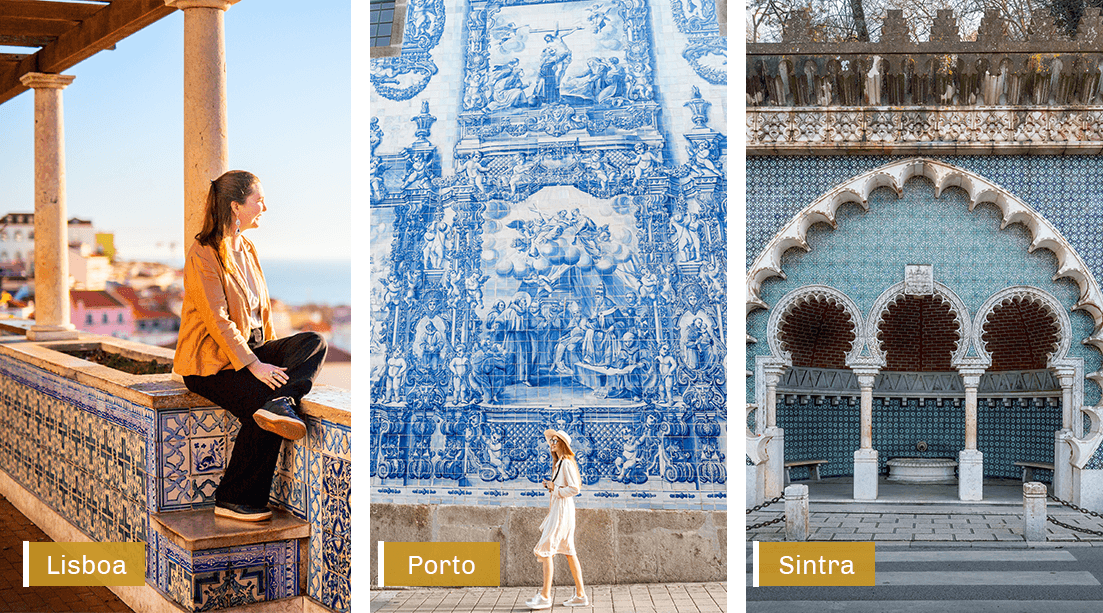
Tiles can be found in every city across Portugal, from the smallest village to the largest urban centres. In Porto, however, tilework reaches another level altogether, with large-scale murals displayed throughout the city.
Porto
As the second-largest city in Portugal and the capital of the north, Porto has a strong tile culture, rooted in the symbolism of wealth and social status. The city’s extensive use of tiles showcases a wide range of colours and patterns, with long walls depicting scenes from Portuguese history.
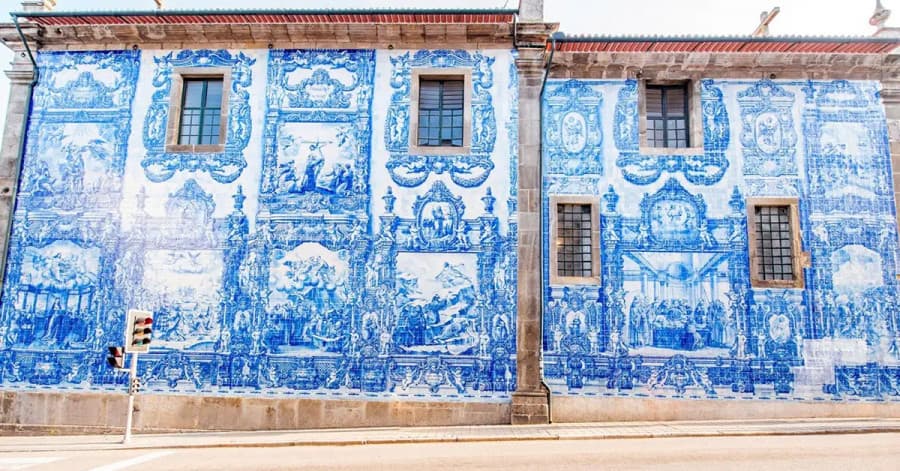
One of the most famous tile murals can be found inside São Bento Station, inaugurated in 1916, where visitors can admire more than 20,000 hand-painted blue tiles illustrating the history of Portugal. Another notable example is the exterior of the Carmo Church, located in the city centre, an 18th-century Baroque-Rococo church entirely covered in white and blue tiles.
Lisbon
The 1755 earthquake had a significant impact on Lisbon’s modern architectural identity. After the destruction of the Portuguese capital, the reconstruction of the city became urgent, and tiles once again emerged as a practical and aesthetic solution.
In the years following the catastrophe, tile production increased dramatically, particularly designs depicting Catholic religious figures, often used as a means of seeking protection. Tiles became more than a decorative element; they became a standard feature of new constructions in the city centre. Even today, they can be found throughout Lisbon, especially in historic neighbourhoods such as Chiado and Alfama.
Portuguese Tiles: Connecting the Past and Future
The preservation of traditional Portuguese architecture and design is a vital part of the country’s cultural heritage. Today, developers are making significant strides in this effort by restoring historic tiled buildings and incorporating this iconic art form into modern constructions, ensuring these works of art continue to be enjoyed and appreciated by generations to come.
Whether you are a resident or a curious traveller, taking the time to explore the unique tiled façades of Portugal’s historic buildings is an experience not to be missed. With each step through the cobblestone streets and squares, you will be charmed by a world of beauty, creativity, and cultural richness.

Portugal Homes
Get the best property advice.